


Aged care SEO starts with helpful website content because that’s what both families and Google are actually looking for.
If you’ve ever compared aged care provider websites while searching for a parent’s next move, you’ll know the feeling. Every site promises “quality care” and “compassionate support,” but few say anything specific. That’s the gap most providers miss. Families want clarity, and search engines reward the same thing.
At mattersolutions.com.au, we’ve worked with Brisbane businesses on SEO and content strategy since 2008. So when we say clear content builds trust faster than a glossy homepage, it’s because we’ve watched it play out across dozens of client sites.
In this article, we’ll cover why trustworthy content influences rankings, how duplicate content quietly hurts your site, and how to build credibility without a big budget.
Why Aged Care SEO Depends on Trustworthy Content
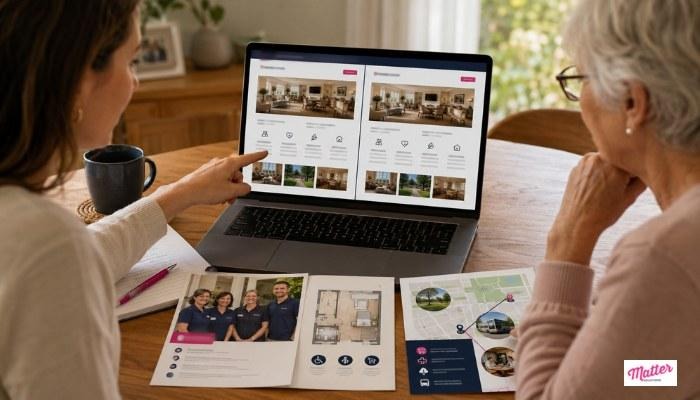
Aged care SEO depends on trustworthy content because Google and families judge this space by the same standard. Both are asking whether the information holds up.
This isn’t a normal industry to write for. People searching for aged care services are often making decisions for a parent or partner they love. And usually, they’re doing it under pressure with little time to compare options properly.
That said, clear language and credible sources build that trust before a family ever picks up the phone. The Australian Government’s Aged Care Quality Standards set out exactly what quality care should look like. Providers who reflect that language on their own site come across as informed rather than vague.
Here’s a simple example. A facility that explains its respite care options in plain, specific terms earns more trust than one that leans on phrases like “compassionate, personalised support.” The second sentence sounds nice while the first one actually helps someone decide.
How Duplicate Content Hurts Aged Care Websites

Duplicate content hurts aged care websites by confusing search engines and signalling low effort to the families reading it. If your organisation runs multiple facilities, this is worth checking today.
Many aged care facilities publish a near-identical service page for every location, with the same paragraphs and the same stock phrases, just the suburb name swapped out. Because of that, search engines struggle to work out which page deserves to rank, so ranking potential drops across the board instead of improving.
Families notice too. If two of your pages read exactly the same, it looks like nobody took the time to describe what actually happens at each location.
Fixing this doesn’t take a content overhaul. It just needs specific details added to each page, such as:
- Unique Staff Ratios and Qualifications: Mention how many carers are on shift, what qualifications your team holds, and how that compares across each facility you run.
- Local Amenities and Community Ties: Nearby parks, transport links, or community groups your residents already engage with can help set that suburb apart.
- Facility-Specific Room Features: The actual layout, accessibility features, or views at that location say more than a generic description ever could.
Once each service page has its own detail, it’ll stop competing with your other pages and start earning its own ranking.
Building Credibility Without a Big Content Budget
The best part about building credibility through content is that it costs far less than most providers assume. A large marketing team isn’t required, and neither is a constant stream of new blog posts. What actually moves the needle is answering the questions families are asking.
If this sounds like your organisation, the good news is that small, consistent changes go further than a big content push.
Here’s where to focus that effort first.
Lean on Credible Sources
You might be wondering where to even start. Begin with sources families already trust, like government guidelines on aged care standards or published health data.
Referencing these sources in your own content strengthens your site without needing expensive in-house expertise. It also shows families you’re pointing to something verifiable, instead of repeating vague marketing language.
Answer the Questions Families Are Already Asking
Every family researching aged care providers has the same handful of worries: cost, staff qualifications, waitlists, and day-to-day life at the facility.
Answering these directly, in plain language, costs little more than staff time. At mattersolutions.com.au, we’ve seen smaller clients build authority faster this way than competitors spending far more on generic content.
Once you’ve covered the basics honestly, families will feel confident enough to reach out, and that confidence is what actually drives enquiries.
Running a Content Audit and Competitor Analysis
Now that you know how to build credibility, the next step is checking what’s already on your site, and what your competitors are doing better.
A content audit reveals outdated, thin content, or duplicate pages working against your rankings. Most providers are surprised by how much they find once they actually look.
Start by reviewing your site against these two checks:
- Internal Content Audit: Go through every service page and flag anything outdated, generic, or duplicated across locations. Note what needs rewriting first.
- Competitor Analysis: This shows you the content gaps worth filling. Search the terms your target audience uses and see which aged care providers already answer them well.
Running both regularly, rather than once a year, keeps your SEO strategy responsive as services, staff, and guidelines change.
Turning Content Into Your Aged Care SEO Advantage
Helpful, honest content is where a strong aged care SEO strategy starts. It isn’t an afterthought you add once the website is built.
If your organisation is still relying on generic service pages or duplicate content across locations, you’re leaving trust and rankings on the table. Providers who audit their content and fix these gaps consistently earn more enquiries than those chasing keywords alone.
You don’t have to figure this out on your own. At mattersolutions.com.au, we help aged care providers strengthen their content marketing and SEO strategy. That way, families find the right information, and you get the enquiries you’re actually looking for.
Frequently Asked Questions About Aged Care SEO and Content Marketing
Here are a few common questions aged care providers ask us about SEO and content marketing.
What does SEO mean in healthcare?
SEO in healthcare means search engine optimisation applied to medical and care-related content, where accuracy and trust carry more weight than in most other industries. Google treats healthcare content carefully because the information can influence real decisions about someone’s wellbeing.
How is SEO used in healthcare?
Healthcare content marketing uses SEO by targeting the specific questions patients and families search for, then answering them with clear, credible content. This includes optimising service pages, building local visibility, and referencing trustworthy sources like government health guidelines.
What is the purpose of content marketing in healthcare?
The purpose of content marketing in healthcare is to build trust with patients and families while improving search visibility at the same time. Well-written content answers real concerns, positions a provider as informed, and naturally supports better rankings.
Why is SEO important for aged care facilities?
SEO is important for aged care facilities because families researching care options rely heavily on search results to compare providers. Facilities with clear, helpful content earn more trust and more enquiries than those with generic or duplicated pages.
